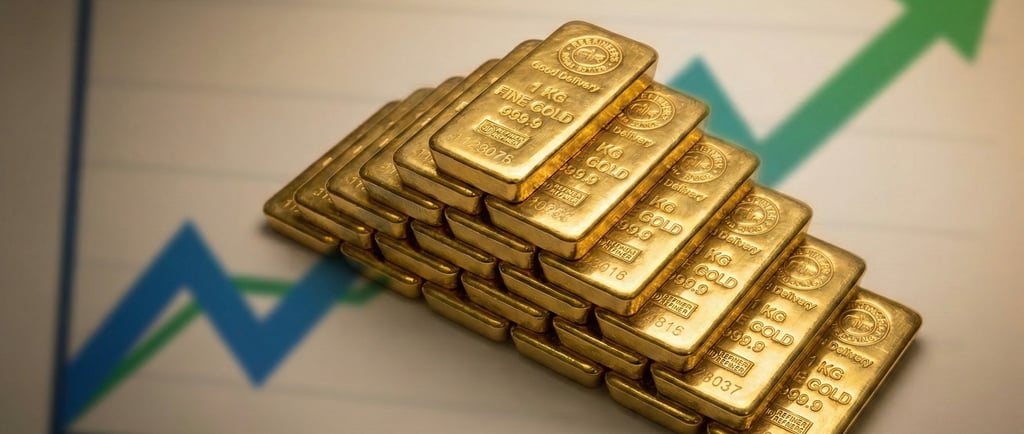
Gold Surges Toward $5,400, Oil Jumps 13%, as Strait of Hormuz Disruption Sends Shockwaves Through Markets
GOLD
Fides Global Bullion Newsroom
3/2/20263 min read

March 2, 2026 | Fides Global Bullion Newsroom
Market Snapshot
Gold: ~$5,350–$5,400/oz (spot, safe-haven inflows)
Silver: Rising but lagging gold amid risk repricing
Oil (Brent): +8% to +13%, testing multi-month highs above $80/bbl
Equities: Broad index weakness; risk assets under pressure
Trend Diagnosis: A sudden escalation in the Middle East characterized by coordinated U.S. and Israeli military action against Iran and the effective shutdown of tanker traffic through the Strait of Hormuz has triggered a classic risk-off surge in precious metals and energy markets, with gold and crude oil both climbing sharply as investors reweight portfolios toward safe havens and inflation risk premia.
Key Highlights
Gold tests key resistance near $5,400/oz as investors rush into safe assets amid geopolitical uncertainty.
Oil prices spike 8–13%+, with Brent crude touching levels not seen since early 2025 due to fears that disruptions in the Strait of Hormuz could materially constrain global energy flows.
Global equities slide as risk sentiment deteriorates; U.S. and Asian markets weaken in tandem with rising safe-haven demand.
The Why
Gold’s recent advance is not the result of a routine macro catalysts, but a geopolitical risk shock with real economic implications. The Strait of Hormuz through which roughly 20% of global crude and LPG supplies transit daily has seen a de facto stoppage of commercial tanker traffic following Iranian warnings and a series of missile and drone attacks. This has elevated energy security fears and pushed market participants into hedges that historically perform during episodes of systemic uncertainty.
Crude’s jump and gold’s rally are interconnected: higher energy risk premiums feed inflation expectations and heighten currency and asset market stress, while gold absorbs capital fleeing risk assets. In essence, both commodities are pricing in a materially altered risk landscape where supply chain disruptions and policy responses could persist.
What the Market Is Missing
Safe-haven characteristics matter more than cyclical drivers right now. This episode is not about fundamentals like real rates or immediate demand growth but about capital preserving value and liquidity under extreme stress.
The inflation linkage is delayed but potent: sustained oil supply disruption tends to feed through to broader price levels over months, not days meaning gold’s hedge role may be priced in before headline inflation confirms it.
Policy feedbacks are underpriced: fiscal, monetary, and strategic reserve actions may intensify as authorities respond to both energy shocks and financial market stress, supporting bullion flows behind the scenes.
Forward Outlook (Next 5–7 Days)
Scenario: Continued Conflict and Strait Disruption
Condition: Persistent hostilities keep tanker traffic constrained.
Implication: Gas and crude premiums remain elevated; gold consolidates above $5,300 and tests breakout levels above $5,450 as volatility remains high.
Scenario: Diplomatic Truce or Partial Reopening
Condition: De-escalation signals and partial resumption of Hormuz traffic.
Implication: Oil retreats from peaks; bullion holds elevated levels but retraces some of the sharpest moves, presenting tactical accumulation windows.
Catalysts to Monitor: energy infrastructure damage reports, shipping and insurance flow data through the Gulf, central bank reserve discussions, and inflation expectations via breakeven rates.
Cross-Market Signal
Gold’s advance is deeply correlated with FX, real yields, and oil risk premia, emphasizing how geopolitical shocks propagate through macro markets:
A stronger USD amid risk aversion can coexist with gold upside when real rates and policy uncertainty dominate.
Oil’s sharp repricing often heralds inflationary pressure ahead of economic data confirms it, reinforcing precious metals’ hedge utility.
Strategic Overlay
Missed Opportunities (Where Markets Are Complacent)
Treating bullion’s rise as tactical trading rather than risk pricing under stress.
Overlooking the amplifying effect of energy security risk on inflation expectations and monetary policy asymmetry.
Strategic Implications (If Executed Well)
Hedging: Rebalance exposure to include safe-haven assets and real asset proxies during sustained risk repricing.
Reserve Allocation: Sovereign and institutional frameworks may need to reassess bullion weightings in light of heightened risk premiums.
Portfolio Protection: Gold’s current trajectory reflects risk pricing as much as macro fundamentals position accordingly rather than reacting tactically.
For ongoing insights and in-depth analysis, subscribe to our newsletter to stay ahead in precious metals and macro strategy.
©2025. All rights reserved.
PLEASE NOTE: The value of precious metals may fall as well as rise. Historical trends do not guarantee future price moves. Nothing on Fides Global Bullion LLC''s websites nor in any of its communications constitutes investment advice. You should consider seeking professional advice to determine if owning bullion is right for you.
Site Links
Address
5900 Balcones Drive STE 100
Austin, TX, 78731, US
Hours
9 AM - 5 PM
Contacts
+1-817-661-3327
contact@fgbullion.com